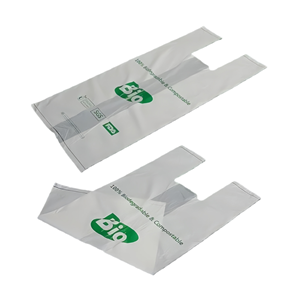
In today's environmentally conscious world, shoppers and retailers alike are asking a critical question: Are the grocery store produce bags we use every day actually compostable? The aisle of the supermarket is changing, and sustainability is driving that shift.
The answer, unfortunately, is not a simple yes or no. While the majority of traditional clear bags are still standard plastic, a growing number of forward-thinking retailers are switching to certified alternatives. Bags certified to standards like DINplus, ASTM D6400, and OK Compost are engineered to break down naturally.
At EcoKeep, as a global provider of biodegradable & compostable packaging solutions, we are here to demystify the science. This guide will walk you through the essentials of compostable produce bags, their certifications, and why they are the smart choice for businesses and the planet alike.
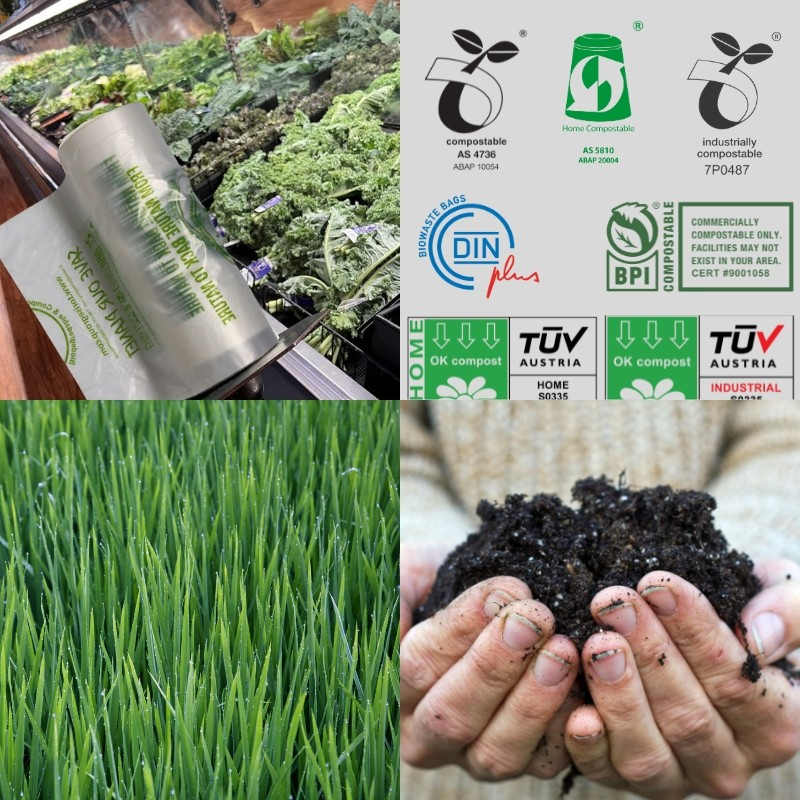
What Makes a Produce Bag Compostable?
Compostable Fruit Bags vs. Traditional Plastic Bags: Key Differences
Traditional plastic bags are derived from petroleum-based polymers. They are designed for durability, which ironically is their downfall—they persist in the environment for centuries, contributing to microplastic pollution. In contrast, compostable vegetable bags are a new breed.
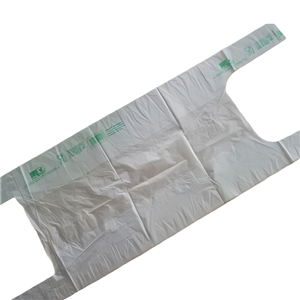
These eco-friendly alternatives are formulated from renewable resources like corn starch, PLA (polylactic acid), and PBAT. Under the right conditions, they don't just break down; they become food for microorganisms, returning to the earth as harmless biomass, water, and CO2 within months.
What are compostable bags made of?
Genuine eco friendly produce bags are composed of plant-based biopolymers. These materials adhere to strict international standards to ensure that, upon degradation, they leave behind zero toxic residues. This stands in stark contrast to plastic bags biodegradable only in name, which often leave harmful micro-fragments in the soil.
Understanding Compostable Bag Certifications
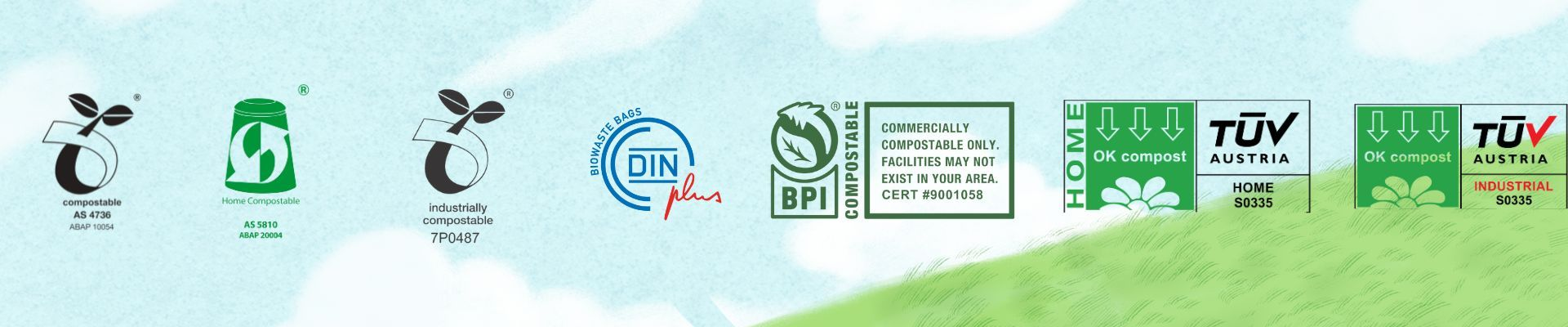
In the green packaging industry, trust is built on certification. Without a verified mark, "biodegradable" is just a buzzword. Here are the rigorous standards EcoKeep products adhere to:
DINplus and EN13432 (DIN Certco)
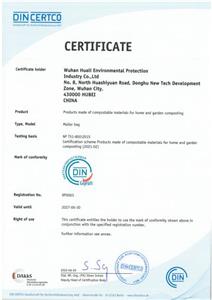
These are the gold standards for the European market. EN13432 ensures that compostable grocery bags will disintegrate in an industrial composting facility within 12 weeks, leaving no harmful residues.
OK Compost and OK Compost HOME (TÜV Austria)
A dual-certification system. "OK Compost Industrial" guarantees breakdown in high-heat industrial facilities. More impressively, "OK Compost HOME" certifies that the bag will degrade in your backyard compost heap, which operates at much lower temperatures.
ASTM D6400 (BPI)
This is the benchmark for the North American market. Issued by the Biodegradable Products Institute (BPI), ASTM D6400 certification is your assurance that biodegradable produce bags will compost safely and completely in municipal facilities across the US and Canada.
AS4736 and AS5810 (ABA)
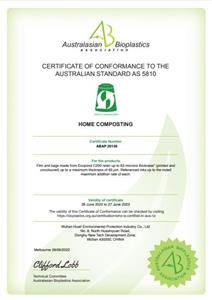
For our partners in Australia, these standards cover both industrial (AS4736) and home (AS5810) composting, ensuring compliance with strict Australian environmental regulations.
How to Identify Genuine Compostable Produce Bags
Identify certification marks on compostable bags
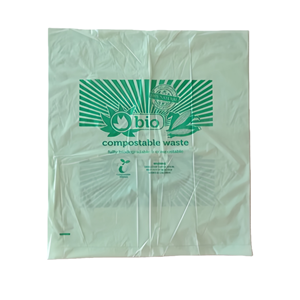
The easiest way to spot a fake? Look for the logo. Legitimate compostable produce bags will prominently display marks like the BPI seedling logo, OK Compost, or the ABA loop. If a bag claims to be eco-friendly but lacks these marks, proceed with caution.
Sensory Tips
Smell: Unlike the sharp, chemical scent of some plastics, compostable bags often have a neutral or faintly sweet, grain-like aroma.
Feel: They typically feel softer and "silkier" to the touch compared to the crinkly rigidity of HDPE plastic.
Color: Because they are made from bio-based materials, it is difficult to achieve crystal-clear transparency. Most are translucent or have a milky, matte finish.
Why Choose Our Compostable Fruit Bags?
Certified to the highest standards
At EcoKeep, we don't cut corners. Our Biodegradable Produce Bag line is fully certified to meet DINplus, EN13432, ASTM D6400, and OK Compost standards. This ensures compliance for global export and consumer safety.
Designed for industrial and home composting
Versatility is key. Our bags are engineered to perform in high-heat industrial facilities while remaining safe for home composting enthusiasts. This dual capability makes them an excellent choice for retailers serving diverse communities.
Great for bulk orders: MOQ 500kg
We are a manufacturing partner for businesses committed to scale. Specializing in B2B supply, our Minimum Order Quantity (MOQ) is 500kg. This makes us the ideal partner for:
Supermarket chains looking to overhaul their produce aisle.
Agricultural distributors needing sustainable packaging.
Eco-brands sourcing private-label solutions.
FAQs About Compostable Produce Bags
Do compostable bags break down in landfills?
Generally, no. Landfills are anaerobic (oxygen-free) environments designed to preserve trash, not break it down. Compostable items need oxygen and microbes to degrade effectively.
How long does it take for compostable bags to degrade?
In an industrial setting, disintegration happens in about 90 days, with full biodegradation within 180 days. Home composting is slower, typically taking up to 12 months depending on the weather and compost health.
Are compostable fruit bags safe for food contact?
Absolutely. Our bags are non-toxic, food-safe, and designed specifically for the transport and storage of fresh produce.
Can I customize the design and size of my bag?
Yes! As a direct manufacturer, EcoKeep offers full customization. From bespoke sizes to branded printing with eco-friendly inks, we tailor our solutions to your brand identity.
Frequently Asked Questions (FAQ)
Yes. All certified compostable bags are inherently biodegradable. However, not all plastic bags that are biodegradable are compostable. Certification (like ASTM D6400) proves the bag will break down into organic soil rather than just fragmenting into microplastics.
Only if they carry the "OK Compost HOME" or similar certification. EcoKeep’s range includes home-compostable options designed to break down at lower, ambient temperatures found in backyard bins.
While consumer brands exist, for retailers, EcoKeep provides industrial-strength bags that don't split under the weight of potatoes or apples, ensuring customer satisfaction in the aisle.
The best bag is one that holds your groceries securely and then lines your compost bin at home. Our dual-use bags offer durability for shopping and convenience for waste disposal.
Currently, compostable resins are more expensive than petroleum plastics due to the complex manufacturing process. However, the environmental cost of traditional plastic is far higher. For businesses, the brand value of sustainability often outweighs the small incremental cost per unit.
Modern bio-resins have closed the performance gap significantly. While they have a shorter shelf life (usually 12-18 months), they offer comparable tensile strength and puncture resistance to traditional HDPE bags during use.
They are typically a blend of PLA (polylactic acid from corn or sugarcane), PBAT (a biodegradable binding agent), and corn starch. This blend provides the necessary flexibility and strength.
For wholesale quantities, buying directly from a manufacturer like EcoKeep is the most cost-effective route. We ship globally and handle large-scale orders that retail sites cannot fulfill.
EcoKeep supplies distributors across the US. Contact us directly to find a local distributor or to arrange a direct shipment to your warehouse.
Reviews consistently highlight durability and certification as key factors. EcoKeep prides itself on transparent certification and robust quality control, making us a top-rated manufacturing partner for brands worldwide.
Conclusion: Make the Switch to Compostable Produce Bags
The transition from plastic to plant-based is not just a trend; it's a necessity. By choosing certified compostable produce bags, you are taking a tangible step towards a circular economy.
Ready to green your supply chain? With EcoKeep, you gain a partner with global expertise, rigorous certifications, and the manufacturing capacity to support your growth. With a minimum order of 500 kg, we are ready to supply the bulk solutions your business needs. Contact us today for a personalized quote and let's make sustainability the standard.