Plastic Bag Ban 2026 Alternatives: U.S. Retailer Guide
Plastic Bag Ban 2026 Alternatives: The U.S. Retailer's Compliance Guide to Compostable Bags for Grocery Stores
By Janet Liu · April 25, 2026 · Reading time: 7 min
Table of Contents
The 2026 State of Play: Where U.S. Plastic Bag Bans Stand Right Now
California SB 1053: The Most Sweeping Checkout Bag Ban in U.S. History
Why Compostable Bags for Grocery Stores Beat Paper at the Checkout
On-Bag Labeling Rules: What Must Appear on Compliant Compostable Bags
How to Source California SB 1053 Compliant Bags at Commercial Scale
If you operate a grocery store, pharmacy, convenience store, or food mart in the United States, 2026 is the year the regulatory environment changed materially. Plastic bag ban 2026 alternatives are no longer a topic for your sustainability team alone — they're a legal compliance issue with enforcement already underway. This guide gives U.S. retailers, compliance consultants, and packaging procurement managers a clear, state-by-state breakdown of what's now in force, what bags remain legal, and how certified compostable bags qualify as a direct, cost-effective replacement.
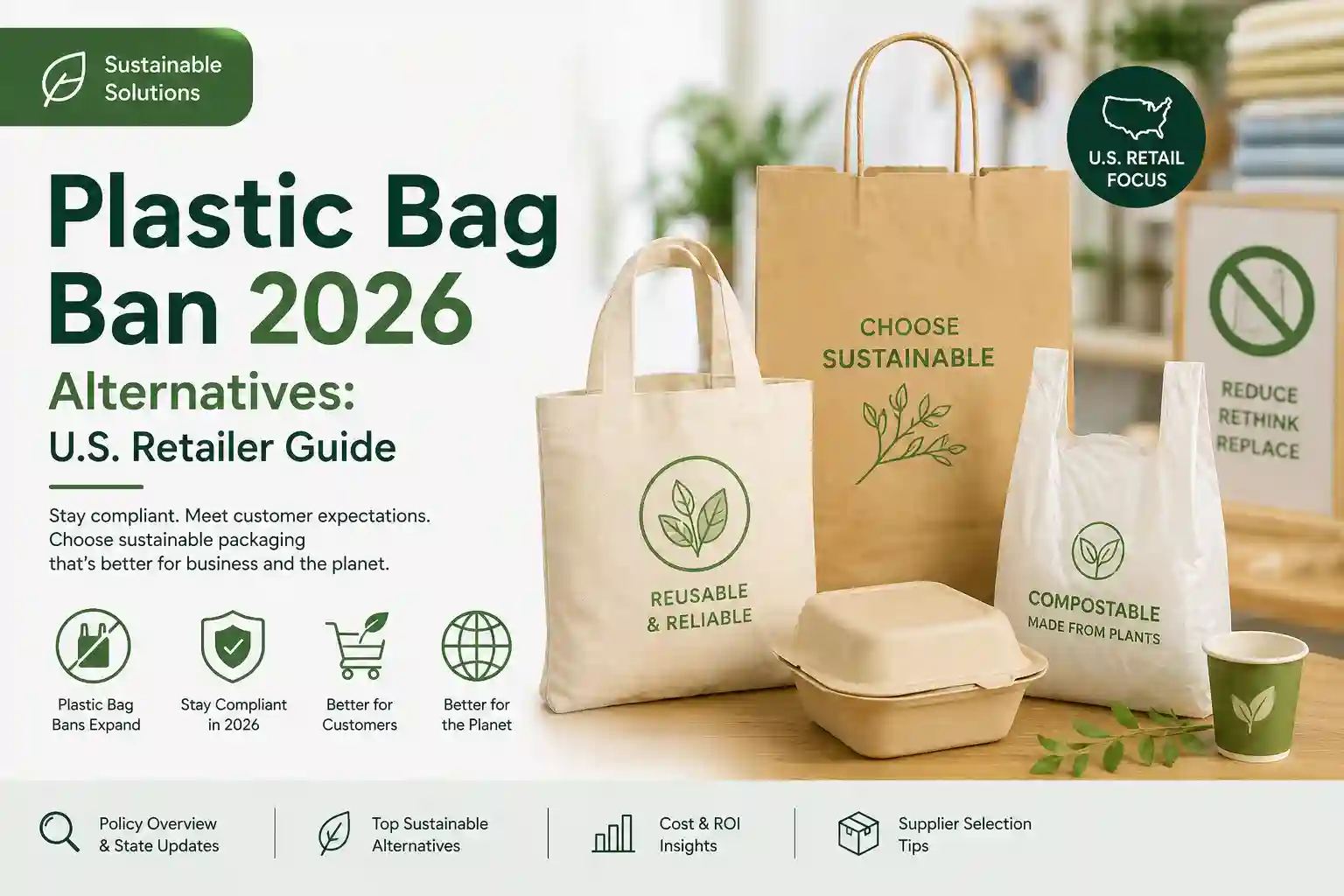
1. The 2026 State of Play: Where U.S. Plastic Bag Bans Stand Right Now
As of January 2026, plastic bags in grocery stores are illegal in 12 states: California, Colorado, Connecticut, Delaware, Hawaii, Maine, New Jersey, New York, Oregon, Rhode Island, Vermont, and Washington. That represents roughly 37% of U.S. retail locations covered by some form of plastic bag prohibition.
There is no national plastic bag fee or ban currently in effect in the United States. With no federal law governing grocery bag type nationwide, it's up to each individual state to decide how to handle the issue. But the trend is unmistakably in one direction: every new state law passed since 2020 has been more restrictive than those before it — closing loopholes, raising fees, and expanding the definition of covered stores.
In certain states, there are newly added parameters and restrictions governing packaging materials, labeling, and types that have taken effect in January or will later in 2026. For multi-state retailers, managing these differing requirements is now a full-time compliance task — and sourcing a single certified alternative that works across all covered markets is the fastest path to simplification.
Key Takeaway: 12 U.S. states ban plastic grocery bags as of January 2026. With no federal preemption, each state defines its own permitted alternatives — but certified compostable bags consistently appear as an explicitly allowed option across California, Oregon, Vermont, and Delaware law.
2. California SB 1053: The Most Sweeping Checkout Bag Ban in U.S. History
A new California law, effective January 1, 2026, makes single-use plastic carryout bags a thing of the past. Governor Gavin Newsom signed Senate Bill 1053, authored by Sen. Catherine Blakespear (D–Encinitas), banning the distribution of plastic bags at grocery stores, pharmacies, and retail checkout counters beginning January 1, 2026.
SB 1053 prohibits stores from offering any plastic bags — regardless of thickness or whether they are labeled reusable. Instead, retailers must provide options such as paper bags made from at least 50% recycled material or certified compostable bags.
The law closes a decade-long loophole. While California passed a ban on certain single-use plastic carryout bags more than a decade ago, plastic bags made of a thicker film that were considered reusable were still allowed. Proponents of SB 1053, which was signed by Gov. Gavin Newsom in 2024, said this actually led to a proliferation of plastic. According to CalRecycle data cited by bill author and state Sen. Catherine Blakespear, the tonnage of grocery and merchandise bags disposed by Californians grew by 47% between 2014 and 2022.
Enforcement is active and financially significant. On October 17, 2025, California's Attorney General announced a settlement with four large plastic bag manufacturers requiring them to stop selling single-use plastic bags in the state and to pay roughly $1.7 million in penalties and fees.
The law also sets a future compliance milestone that retailers must plan for now: beginning January 1, 2028, recycled paper carryout bags must contain at least 50% post-consumer recycled material. Retailers relying on national or international suppliers should confirm well in advance that future inventory will meet this standard.
SB 1053 placed restrictions on the types of bags that may be distributed at the point of sale by most grocery stores, retail stores with a pharmacy, convenience stores, food marts, and liquor stores. The law applies to all covered store formats statewide — there is no exemption for independent operators or small-format retailers.
3. Washington and Oregon: What's Changed for 2026
As of 2026, Washington's single-use plastic bag ban has entered a new phase with updated fees and requirements. Originally implemented in 2021, the law prohibits thin, 0.5-mil single-use plastic bags at all retail and grocery stores, restaurants, and takeout establishments. Customers must now pay 12 cents for plastic film carryout bags at all retailers and restaurants. Paper bags, which must contain a minimum of 40% post-consumer recycled content, cost eight cents.
HB 1293, passed in 2025, delays a planned increase in the required minimum thickness for plastic bags from 2.25 mil to four mil until January 1, 2028. Washington's approach — escalating fees on remaining plastic bags rather than outright elimination — differs from California's hard ban, but the trajectory is the same. Retailers in Washington should treat the 2028 threshold as the next compliance deadline to plan for.
Oregon prohibits single-use plastic bags at large grocery stores and retailers. Compostable bags certified to ASTM D6400 or meeting equivalent standards are permitted as alternatives under Oregon's rules, provided they are labeled and disposed of correctly. Vermont, which enacted its ban in 2020, similarly permits certified compostable bags as an exempt alternative to standard single-use plastic.
4. Produce Bags Are Now Regulated Too: California SB 1046
Many retailers focus compliance efforts on checkout bags and overlook a parallel regulation that covers the produce aisle. California SB 1046 governs pre-checkout bags — the thin roll bags used for loose produce, bulk nuts, and grains.
Pre-checkout bags (produce bags, bulk bin bags, etc.) cannot be plastic. They must be either certified compostable or a recycled paper bag. Pre-checkout bags (small roll bags for produce, meat, or bulk items) follow a separate schedule: beginning January 1, 2025, stores may provide only recycled paper pre-checkout bags or certified compostable bags. Thin roll-type plastic produce bags made from standard plastic resin are being phased out.
This regulation directly affects compostable produce bag sourcing at scale. Grocery chains with California locations must have switched produce roll bags to certified compostable alternatives by now. For multi-state operators, aligning this transition with a single certified compostable produce bag supplier — rather than managing state-by-state SKUs — significantly reduces procurement complexity.
ECOKEEP's Compostable Produce Bags are certified to ASTM D6400 and EN 13432, pre-printed with compostable labeling, and available in roll format for direct integration into existing produce bag dispensers.
5. The Three Legal Bag Alternatives for Covered U.S. Retailers
Under California SB 1053 and equivalent laws in other ban states, covered retailers have three compliant bag options at checkout. Understanding the practical trade-offs of each is essential for procurement planning.
1. Recycled Paper Bags
Recycled paper bags are the primary replacement for plastic at checkout. Shoppers at grocery stores, pharmacies, liquor stores, and convenience stores will be limited to paper bags, which must cost at least 10 cents each. These bags must be made from recycled material and must be recyclable through standard California systems. They cannot have plastic laminations or plastic-based coatings. Paper bag pricing is likely to increase further: from January 2028, bags must contain at least 50% post-consumer recycled content, tightening the supply market.
2. Certified Compostable Bags
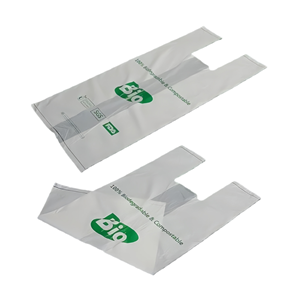
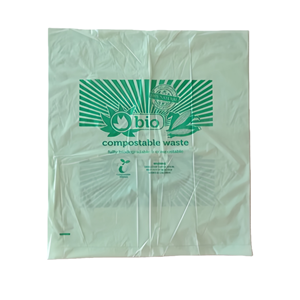
Compostable bags must follow specific guidelines: they cannot show the recycling symbol or chasing arrows, cannot be labeled as "biodegradable," "degradable," or "decomposable," the opening of the bag must be at least 15 inches wide, and they must show the word "compostable" on both sides in one-inch green letters or inside a one-inch green band. When these requirements are met, compostable bags are fully compliant and can be distributed at checkout.
3. Non-Plastic Reusable Bags
Cloth tote bags, canvas bags, and other durable non-plastic reusable bags remain fully permitted. However, selling these at checkout is a different business model from disposable bag provision — they require a minimum price point and are rarely substituted on a unit-for-unit basis for the checkout bags retailers currently provide.
6. Why Compostable Bags for Grocery Stores Beat Paper at the Checkout
Paper bags dominate the SB 1053 conversation, but for many grocery formats — particularly produce-heavy stores and delis — compostable bags for grocery stores offer a more practical solution. Here's how they compare:
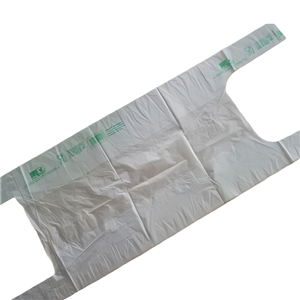
Wet resistance — compostable T-shirt bags resist moisture from refrigerated items and wet produce. Standard recycled paper bags weaken when wet, creating handling issues at checkout
No mandatory per-bag charge — California requires retailers to charge at least $0.10 per paper bag. Certified compostable bags carry no equivalent mandatory fee, giving retailers flexibility on how they price or absorb the cost
Lower weight per unit — compostable film bags pack flat and are lighter per unit than paper bags, reducing shipping costs and storage footprint in high-volume store environments
Print area — compostable T-shirt bags offer full-surface printing for store branding, sustainability messaging, and required labeling in a single production run
Produce line continuity — stores already sourcing certified compostable produce bags under SB 1046 can consolidate both checkout and produce bag SKUs with a single certified supplier
Key Takeaway: Certified compostable bags for grocery stores are explicitly permitted under California SB 1053 and carry no mandatory per-bag fee requirement — unlike paper bags, which must be sold at a minimum of $0.10 each. For stores serving price-sensitive shoppers, this difference matters at the register.
7. On-Bag Labeling Rules: What Must Appear on Compliant Compostable Bags
California's labeling rules for compostable bags at checkout are specific and enforced. Getting the artwork wrong means non-compliance even if the underlying material is certified. Here's what California SB 1053 compliant bags must display:
The word "COMPOSTABLE" — printed on both sides of the bag in one-inch green letters, or inside a one-inch-wide green band
No recycling symbol — compostable bags must not display the chasing arrows symbol, which would imply recyclability
No biodegradable claim — the words "biodegradable," "degradable," or "decomposable" are prohibited on California-compliant compostable bags
Third-party certification mark — a BPI logo or equivalent certifier mark confirming the bag meets ASTM D6400 is required for market credibility and, in some jurisdictions, legal compliance
Minimum 15-inch opening width — bags at checkout must have an opening of at least 15 inches to accommodate standard grocery loads
Washington State adds further requirements: the certifier logo, a color signal (green, beige, or brown), and the word "compostable" must all appear on the bag. Retailers sourcing for multi-state distribution should incorporate all of these elements into a single master artwork to avoid state-specific reprints.
At ECOKEEP, we support full-surface custom printing with water-based inks. Our in-house artwork team can incorporate all mandatory labeling elements — BPI mark, California-compliant green lettering, certifier logos, and color signals — into your store's branded bag design before bulk production.
8. How to Source California SB 1053 Compliant Bags at Commercial Scale
For regional grocery chains and multi-state operators, switching to certified compostable checkout bags involves more than selecting a product. Use this sourcing checklist:
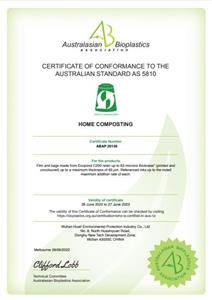
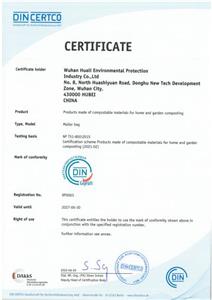
Confirm ASTM D6400 certification — request the current, in-date BPI certification letter and laboratory test report. BPI certificates are renewed biennially; verify the renewal date
Verify on-bag labeling compliance — confirm artwork includes the word "COMPOSTABLE" in one-inch green letters or green band, no chasing arrows, no "biodegradable" claim, and a 15-inch minimum opening width for California
Check production capacity and lead time — ECOKEEP produces 8,000+ metric tons annually at a 30,000 m² facility, with a standard lead time of 3 weeks for 10-ton orders on FOB Shanghai or FOB Wuhan terms
Request SGS / FDA food-contact test reports — essential for bags used in produce, deli, or food-contact environments under SB 1046 requirements
Consolidate SKUs across checkout and produce lines — sourcing both compostable T-shirt bags and compostable produce bags from a single certified manufacturer reduces vendor complexity and certification management overhead
Confirm shelf life and storage specs — ECOKEEP's compostable bags maintain a 12-month shelf life in sealed original carton packaging, stored dry and away from direct sunlight, giving category buyers adequate seasonal inventory buffer
As China's first manufacturer of biodegradable courier bags and a drafter of 15 national biodegradable materials standards, ECOKEEP has supplied certified compostable bags to retailers in the U.S., EU, and Australia since 2002. Our ISO 9001 and ISO 14001 management systems ensure consistent quality across production runs, batch after batch. Request our full certification package and a free sample before placing your first order.
FAQ
Are compostable bags allowed under California SB 1053?
SB 1053 prohibits stores from offering any plastic bags — regardless of thickness or whether they are labeled reusable. Instead, retailers must provide options such as paper bags made from at least 50% recycled material or certified compostable bags. Certified compostable bags are explicitly permitted, provided they meet the labeling requirements specified by CalRecycle.
Do I have to charge customers for compostable bags the way I charge for paper bags?
Beginning January 1, 2026, stores will only be allowed to distribute recycled carryout paper bags to customers at checkout counters for a minimum charge of ten cents ($0.10) per bag. California law mandates the $0.10 minimum charge for paper bags but does not impose an equivalent mandatory fee for certified compostable bags, giving retailers flexibility on their pricing approach.
What's the difference between "biodegradable" and "compostable" bags — and why does it matter legally?
Compostable bags must not be labeled as "biodegradable," "degradable," or "decomposable" under California's SB 1053 labeling rules. Bags marketed as "biodegradable" but not certified to ASTM D6400 or EN 13432 are not compliant alternatives under plastic bag bans. Only third-party certified compostable bags qualify. The distinction is legally enforced and carries real financial penalties for non-compliance.
Which compostable bag certifications are accepted across multiple U.S. states?
ASTM D6400 is the baseline standard referenced in California, Washington, Oregon, and other state plastic bag regulations. BPI certification (Biodegradable Products Institute) is the most widely recognized third-party mark that verifies ASTM D6400 compliance. For retailers operating across both U.S. and international markets, dual certification to ASTM D6400 and EN 13432 covers the widest geographic range from a single product SKU.
Need California SB 1053 compliant bags for your stores?
ECOKEEP supplies ASTM D6400 + BPI certified compostable T-shirt bags and produce bags to U.S. grocery retailers — with compliant pre-printed artwork, 3-week production lead time, and 8,000+ metric ton annual capacity. Request free samples and our certification package today.
Get a Free QuoteReferences
CBS8 — California SB 1053: Banning Single-Use Carryout Bags, January 2026
CalRecycle — Bag Requirements: SB 1053 and SB 1046 Compliance Guidance
Juris Law Group — Plastic Checkout Bags Banned in California Beginning 2026
All About Lawyer — California SB 1053 Plastic Bag Ban: Shopper and Retailer Guide
Packaging Dive — Packaging Laws Taking Effect in 2026: Bags, Foam, PFAS
Surfrider Foundation California — Plastic Pollution Reduction Laws Overview
Washington State Dept. of Ecology — Compostable Product Labeling Requirements
National Conference of State Legislatures (NCSL) — State Plastic Bag Legislation
ASTM International — D6400-21 Standard Specification for Compostable Plastics