PLA PBAT Compostable Bag Material: A Technical Guide
PLA PBAT Compostable Bag Material Explained: What Every Packaging Engineer Needs to Know
By Janet Liu · July 28, 2026 · Reading time: 7 min
Table of Contents
Why Material Knowledge Separates Good Suppliers from Great Ones
When you're evaluating a supplier of PLA PBAT compostable bag material, the fastest way to assess their technical depth is to ask one question: "What's your blend ratio, and why?" A supplier who answers with a precise ratio and a performance rationale is a manufacturer. One who deflects or offers only marketing language is a trader.
At ECOKEEP, we've been formulating cornstarch-based bags and bioplastic packaging materials since 2002. Over that time, our R&D team has processed over 8,000 metric tons of compostable film annually and drafted 15 Chinese national and industrial standards for biodegradable materials. This article gives you the technical framework to evaluate any supplier — including us.
Key Takeaway: Certified compostable bags are never made from a single polymer. Every functional bag requires a precisely engineered blend of PLA, PBAT, and thermoplastic starch — each component serving a distinct mechanical or economic role.
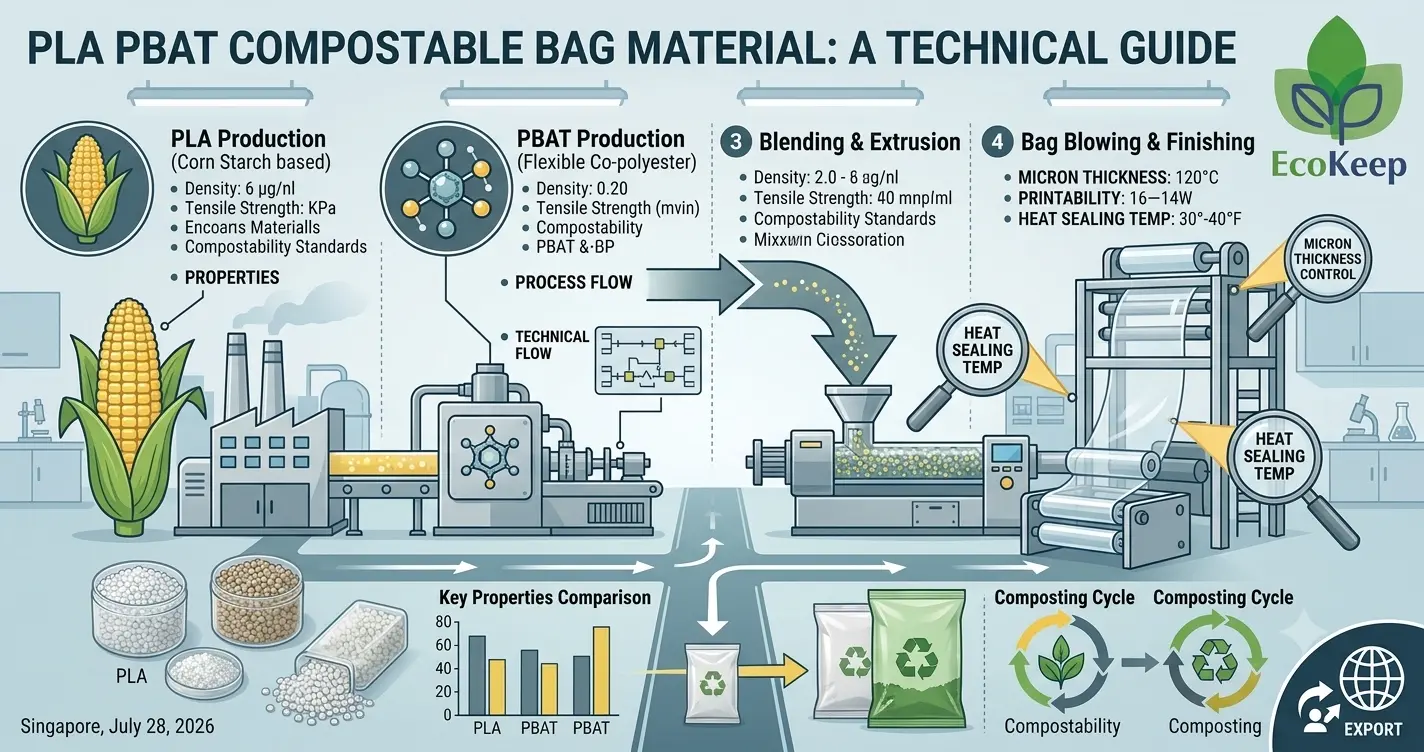
PLA (Polylactic Acid): The Structural Backbone
PLA is a bio-based polyester derived from fermented plant starches — typically corn, sugarcane, or cassava. The process converts starch into lactic acid via microbial fermentation, which is then polymerized into PLA resin.
From a mechanical standpoint, PLA is the stiffness provider in any compostable film compound. It delivers high tensile strength, good optical clarity, and a relatively low production cost among bioplastics. These properties make it an attractive structural matrix for flexible packaging.
However, PLA has one critical limitation that every packaging engineer must account for: it is inherently brittle. Peer-reviewed research consistently confirms this — PLA and PBAT exhibit complementary mechanical properties, with PLA being rigid and brittle while PBAT is flexible and tough. Used alone in a blown-film process, PLA produces a bag that cracks under flex stress, fails at seal points under load, and performs poorly at low temperatures.
PLA also requires industrial composting conditions to degrade meaningfully. It does not break down in a backyard compost pile or landfill within any reasonable timeframe. This is a critical transparency point we always communicate to buyers — it's a feature, not a defect, provided your end-market has access to industrial composting infrastructure.
Origin: Corn starch, sugarcane, or cassava via fermentation
Key strength: High tensile modulus, structural rigidity, optical clarity
Key weakness: Brittle at low temperatures; limited elongation at break
Composting requirement: Industrial composting (55–60 °C sustained)
PBAT: The Flexibility Engine
PBAT (Polybutylene Adipate Terephthalate) is a petrochemical-derived biodegradable random copolymer. Yes — it's fossil-based, not bio-based. This distinction matters enormously when communicating sustainability claims to your customers. PBAT is compostable and biodegradable, but it does not contribute to "bio-based content" percentages.
What PBAT does contribute is irreplaceable: flexibility, elongation, and tear resistance. Its mechanical profile is the near-inverse of PLA's. PBAT is soft, stretchy, and tough — closely resembling the handling feel of conventional low-density polyethylene (LDPE). Without PBAT, flexible compostable packaging simply cannot exist in a functional form. Its very softness, however, means it's far too floppy to form a self-standing bag structure on its own.
Scientific literature supports this complementarity clearly. A peer-reviewed study published in PMC (National Library of Medicine) found that "the melt blending of these two polymers can be a useful strategy to modulate and tailor the performance of the final product from a rigid and brittle material (100% PLA) to a ductile and flexible one (100% PBAT)." In practice, the art lies in choosing the right ratio for the specific bag application.
Origin: Petrochemical (fossil-based, but fully compostable)
Key strength: High elongation at break, tear resistance, film processability
Key weakness: Insufficient stiffness alone; low Young's modulus
Important note: Does NOT count as bio-based content in biobased certifications (e.g., OK Biobased)
Cornstarch (TPS): The Cost-Performance Lever
The cornstarch in a compostable bag formulation is not the culinary powder you keep in a kitchen cabinet. It's been processed into thermoplastic starch (TPS) — a modified, melt-processable form that can be co-extruded with PLA and PBAT in standard blown-film equipment.
TPS serves three functional purposes in the blend:
Cost reduction: Cornstarch is significantly cheaper than both PLA and PBAT on a per-kilogram basis, and increasing its proportion in the blend directly reduces compound cost without abandoning compostability claims.
Accelerated composting rate: Starch degrades rapidly in both industrial and home compost conditions. A higher starch content measurably shortens the disintegration timeline.
Bio-based content uplift: Adding TPS increases the percentage of renewable, plant-derived content — which directly benefits OK Biobased and similar certifications valued by European buyers.
TPS has its own limitations, however. It's hygroscopic — it absorbs atmospheric moisture, which can cause film cloudiness, reduced tensile strength over time, and processing inconsistencies in high-humidity environments. In our experience manufacturing cornstarch-based bags over more than two decades, controlling TPS moisture content before and during extrusion is one of the most critical — and most frequently underestimated — quality control steps in the entire production process.
Origin: Corn (100% bio-based)
Key strength: Lowers cost, accelerates composting, increases bio-based content
Key weakness: Hygroscopic; reduces mechanical strength if overused or mishandled
The Blend Formula: Why No Single Material Works Alone
The central insight of compostable bag material science is simple: no single polymer delivers a commercially viable bag. Nearly all certified compostable bags use a ternary blend — PBAT for flexibility, PLA for stiffness, and starch to reduce cost and accelerate breakdown.
The specific ratio is where supplier expertise becomes visible. A standard all-purpose compostable bag might use a 45–50% PBAT / 30–35% PLA / 15–20% TPS formulation. But that ratio changes significantly depending on the end product:
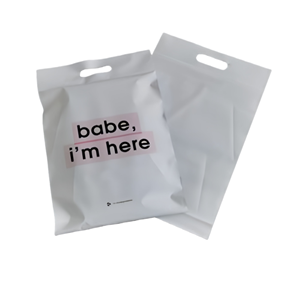
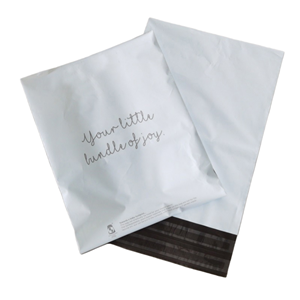
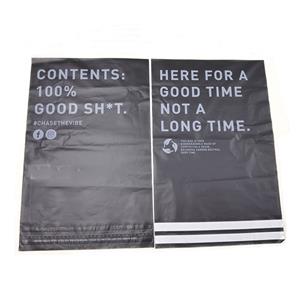
Compostable Mailing Bags require higher PBAT content for drop-impact resistance and seal strength under courier conveyor stress.
Compostable Trash Bags and Compostable Garbage Bags need a stiffer PLA ratio to maintain vertical bag form and resist puncture from sharp waste.
Compostable Dog Poop Bags demand maximum elongation — PBAT content is maximized, TPS minimized to prevent moisture-related degradation during storage.
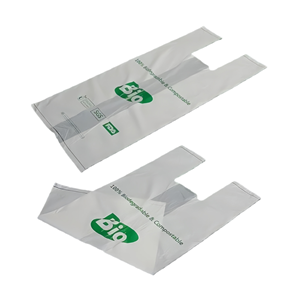
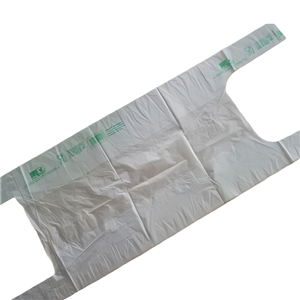
Compostable T-Shirt Bags and Compostable Patch Handle Carrier Bags balance stiffness and hand-feel, favoring a more equal PLA-PBAT ratio with moderate TPS for cost efficiency.
Compostable Produce Bags require thin-gauge film with high clarity — PLA's optical properties are leveraged, with careful control of TPS to prevent haze.
Key Takeaway: Any supplier offering a single fixed compound formula for all bag types is either limiting your product quality or cutting corners on R&D. Application-specific blend engineering is a baseline expectation from a serious manufacturer.
Want to see how ECOKEEP engineers the right blend for your specific product? Speak directly with our technical team — we provide full material datasheets and compound specifications with every quote.
From Formula to Certification: EN 13432 and ASTM D6400
Having the right blend formula is necessary — but it's not sufficient. The finished bag must pass internationally recognized compostability tests before it can be legally marketed as compostable in your target market.
The two dominant standards are:
EN 13432 (Europe): Requires ≥90% biodegradation of organic carbon within 180 days and physical disintegration within 84 days in an industrial composting facility, with no ecotoxicity or harmful heavy metal residue. EN 13432 certification is legally required for products marketed as compostable in the EU.
ASTM D6400 (USA/Canada): The U.S. standard for labeling plastics designed for aerobic composting in municipal or industrial facilities. It requires at least 60% biodegradation within 180 days under industrial composting conditions and is administered by ASTM Committee D20 — a committee of which ECOKEEP is a formal member.
Products certified to one standard typically meet the other, though separate certification may be required by each market's regulatory bodies. For brands exporting to multiple regions, dual certification (EN 13432 + ASTM D6400/BPI) is the lowest-risk path to uninterrupted market access.
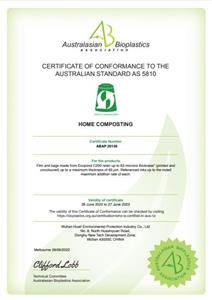
It's also worth noting the critical distinction between industrial compostable and home compostable. Standard PLA/PBAT blends require the sustained elevated temperatures (55–60 °C) of industrial composting facilities. Home compost piles rarely reach these temperatures consistently. If your end-market specifies home composting — common in Australia (AS5810) and parts of Europe — the blend formulation must be substantially modified, typically by increasing TPS content and selecting lower-crystallinity PLA grades. ECOKEEP holds both OK Compost (industrial) and OK Compost HOME certifications, covering both scenarios.
How ECOKEEP Engineers the Blend for Each Application
As a founding member of ASTM D20 and a drafter of 15 Chinese national and industrial standards for biodegradable materials, ECOKEEP treats compound formulation as a core competency, not a procurement activity.
Our 30,000 m² industrial park in Wuhan houses dedicated R&D extrusion lines where we validate each formulation against EN 13432 and ASTM D6400 test protocols before committing to production scale. We were also the first manufacturer in China to produce certified biodegradable courier bags and biodegradable compound bags — a distinction that required us to solve blend engineering problems that no domestic precedent existed for at the time.
In practice, our formulation process for a new customer project involves:
Application audit: Load capacity, drop height, storage duration, temperature range, and printing requirements.
Market certification mapping: Which certifications are legally required or commercially expected in the destination market (BPI, OK Compost, AS5810, etc.).
Blend selection and lab trial: Datasheet validation of tensile strength, elongation at break, and seal strength on pilot-scale film.
Regulatory documentation package: Full test reports, certifications, and FDA/SGS compliance documentation provided with every production order.
Our full product range — from Compostable Mailing Bags to Compostable Trash Bags — is manufactured under ISO 9001, ISO 14001, and ISO 45001 quality management systems. Every batch ships with SGS-verified test reports.
You can explore our full product range and technical capabilities at www.biocompostbag.com.
Frequently Asked Questions
Is PBAT bio-based or fossil-based?
PBAT is petrochemical-derived — it is fossil-based. However, it is certified compostable and biodegradable under EN 13432 and ASTM D6400. It does not contribute to bio-based content percentages. PLA and cornstarch (TPS) are the bio-based components in a standard ternary blend.
What is the PLA vs PBAT difference in mechanical performance?
PLA is rigid and brittle with high tensile strength; PBAT is flexible and tough with high elongation at break. They are mechanical opposites, which is precisely why they are blended together — each compensates for the other's weakness to produce a balanced, functional film.
Can compostable bags biodegrade at home?
Standard PLA/PBAT/cornstarch bags certified to EN 13432 or ASTM D6400 require industrial composting conditions (sustained 55–60 °C). Home compost does not reliably reach these temperatures. Bags certified to OK Compost HOME or AS5810 are formulated differently and will biodegrade in home compost settings.
Why do some compostable bags feel different from others?
Because the blend ratio differs. A higher PBAT content produces a softer, more PE-like hand feel. A higher PLA content produces a crisper, more paper-like feel. The ratio is engineered for the specific application, not chosen arbitrarily.
How do I verify a supplier's material quality?
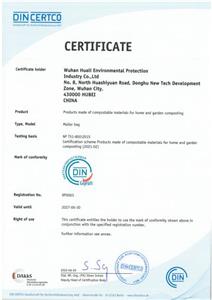
Request the compound datasheet (tensile strength, elongation at break, MFI/melt flow index), third-party certification documents (BPI, TÜV Austria, DIN CERTCO), and SGS test reports. A credible manufacturer provides these documents without hesitation before or at the time of sampling.
Ready to source compostable bags for your brand?
ECOKEEP's technical team provides full compound datasheets, application-specific blend recommendations, and certified sample packs — backed by 24 years of bioplastic packaging manufacturing experience.
Get a Free Quote