EN 13432 vs ASTM D6400: Compostable Certification Guide 2026
EN 13432 vs ASTM D6400: The Complete Guide to Compostable Certification Standards for Packaging Buyers
By Janet Liu · March 27, 2026 · Reading time: 7 min
Table of Contents
If you source compostable packaging for resale in Europe, North America, or Australia, understanding the difference between EN 13432 vs ASTM D6400 isn't optional — it's a prerequisite for legal market access. These two compostable certification standards govern whether your product can be labeled "compostable" in its target market, and getting it wrong can result in blocked shipments, regulatory fines, or greenwashing lawsuits. This guide breaks down both standards, the certification bodies behind them, and what procurement managers need to do in 2026 to stay compliant.
1. Why Compostable Certification Standards Matter in 2026
2026 is shaping up to be a pivotal year for compostable packaging compliance. New and expanded regulations across Europe, the U.S., and Asia are forcing brands to reevaluate their use of compostable materials — not just from a performance standpoint, but through the lens of legal compliance.
The cost of getting it wrong is escalating. The Biodegradable Products Institute (BPI) uses ASTM D6400 as the core standard for certifying packaging in the U.S. Without this label, your product may violate FTC Green Guides, exposing your brand to legal risk over greenwashing. In Europe, the stakes are equally high: the Empowering Consumers for the Green Transition Directive (ECGT) will ban generic green claims and offset-based product "climate neutral" claims across the EU from September 2026, forcing a fundamental redesign of how companies communicate environmental performance.
Generic claims such as "eco-friendly," "biodegradable," or "climate neutral" become riskier unless they are specific, evidenced, and not based solely on offsetting. For packaging importers, this means third-party certification is no longer a nice-to-have — it's the minimum threshold for market entry.
2. EN 13432 Explained: Europe's Compostable Packaging Standard
EN 13432 is the European Union's definitive compostability standard for packaging materials. It defines whether a product can legally be labeled and marketed as "compostable" under European law.
EN 13432 involves four stringent tests conducted in accredited laboratories. Biodegradation requires that at least 90% of organic carbon converts to CO₂ in under 180 days. Disintegration requires that more than 90% of the product physically breaks down into fragments smaller than 2 mm within 12 weeks. Additionally, the material must pass heavy metal concentration limits and eco-toxicity testing to confirm the resulting compost is safe for plant growth.
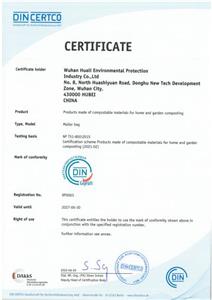
EN 13432 certification is legally required for products marketed as "compostable" in the EU under the Packaging and Packaging Waste Directive 94/62/EC. EN 13432 products are commonly certified by TÜV Austria or DIN CERTCO. The two most recognized certification marks are the OK Compost INDUSTRIAL logo (TÜV Austria) and the Seedling logo (DIN CERTCO).
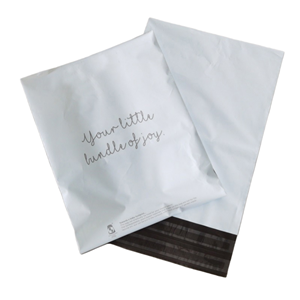
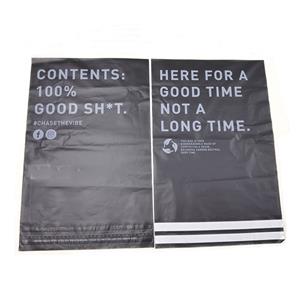
One critical detail many importers overlook: even if your raw material is certified, your final product (e.g., coated paper bowls, printed mailing bags) must also be certified for the intended market. Inks, adhesives, and coatings all affect compostability — and EN 13432 requires the finished article to pass, not just the base resin.
3. ASTM D6400 Explained: The U.S. Compostability Standard
ASTM D6400 is a U.S. standard that defines how compostable plastics must break down in industrial composting facilities without leaving harmful residues. It is one of the most important standards for compostable plastics in the United States. It tells us how to test plastics for safe industrial composting, protects soil, supports composting facilities, and helps businesses make honest claims.
The core technical requirements include:
Biodegradation — conversion to CO₂ at levels comparable to known compostable reference materials within 180 days
Disintegration — items must achieve 90% disintegration in 12 weeks or 84 days
Eco-toxicity — the resulting compost must support plant growth at levels comparable to control compost
The standard applies to plastic products intended for industrial composting systems. It does not apply to landfill degradation. It does not automatically apply to home composting.
Many U.S. municipalities require ASTM D6400 compliance before allowing packaging into organic waste streams. It's also a prerequisite for third-party logos such as BPI Certification in the U.S.
Key Takeaway: Both EN 13432 and ASTM D6400 are industrial composting standards. Neither certifies home compostability. If your market requires home composting claims, you'll need additional certifications like OK Compost HOME (TÜV Austria) or AS 5810 (Australia).
4. EN 13432 vs ASTM D6400: Side-by-Side Comparison
EN 13432 and ASTM D6400 are equivalent industrial compostability standards — EN 13432 applies in Europe, ASTM D6400 in North America. Both require at least 90% biodegradation within 180 days, full disintegration, and eco-safety. But the differences matter for compliance:
Region: EN 13432 covers the EU and 85+ countries that recognize the standard. ASTM D6400 covers the U.S., Canada, Mexico, and other North American markets.
Certification bodies: EN 13432 products are commonly certified by TÜV Austria or DIN CERTCO, whereas ASTM D6400 products often carry BPI certification in the U.S.
Heavy metals: Both require biodegradability, disintegration, and eco-toxicity tests — but EN 13432 includes stricter thresholds for heavy metals and requires full packaging-level compliance.
Legal enforcement: In Europe, EN 13432 is embedded in Directive 94/62/EC and the new Packaging and Packaging Waste Regulation (PPWR). In the U.S., ASTM D6400 is recognized by the FTC as the basis for compostable claims, and many state laws explicitly reference it.
PFAS requirements: BPI's standard for fluorinated chemicals (PFAS) went into effect on January 1, 2020. Products may no longer be claimed as BPI-certified unless they meet all conditions of the rule, including no intentionally-added fluorinated chemicals and a test report showing less than 100 ppm total organic fluorine.
5. BPI and OK Compost: The Certification Marks Buyers Must Know
Standards define the tests. Certification marks prove a product passed them. Two marks dominate global trade in compostable packaging:
BPI (Biodegradable Products Institute): BPI is the leading authority on compostable products and packaging in North America thanks to its commercial compostability certification program operating for over 25 years. That program, and the Certification Mark associated with it, is the most reliable, widely-recognized third-party verification of whether or not an item meets ASTM's compostability standards — a metric required by every U.S. state that has regulatory language around the definition of compostability.
All products certified by BPI meet ASTM standards for compostability, are subject to eligibility criteria around the connection to food scraps and yard trimmings, meet limits for total fluorine (PFAS), and must display the BPI Certification Mark.
A notable 2025 development: BPI launched its Home Compostability Certification Program based on the French Standard NF T 51-800. Certification according to BPI's Commercial Compostability Certification Scheme is a prerequisite for Home Compostability Certification.
OK Compost (TÜV Austria): TÜV Austria is a globally recognized certification organization that verifies products for compostability under the European standard EN 13432. TÜV Certified Compostable products have been independently tested to ensure they safely break down and leave no harmful residues. TÜV Austria also issues OK Compost HOME certification for products that decompose under lower-temperature home composting conditions.
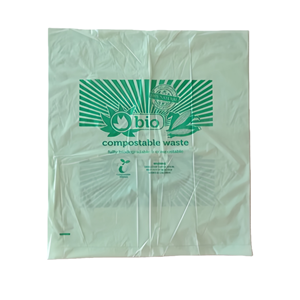
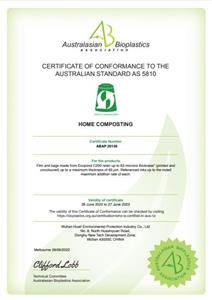
At ECOKEEP (Wuhan Huali), we hold both BPI and OK Compost certifications — along with OK Compost HOME (AS 5810 for the Australian market). This means our compostable mailing bags, compostable garbage bags, and other product lines are accepted in the EU, North America, and Australia without requiring separate product certification for each market. With 24 years of manufacturing experience and membership in the ASTM D20 committee, we understand the technical nuances behind these certifications firsthand.
6. The 2026 Regulatory Landscape: EU, U.S., and Beyond
Compostable packaging compliance is tightening simultaneously across multiple jurisdictions. Here's what's changed:
European Union: Directive (EU) 2024/825 must be transposed by 27 March 2026 and applied from 27 September 2026, adding new "greenwashing" prohibitions to the Unfair Commercial Practices framework. The EU's Packaging and Packaging Waste Regulation (PPWR) applies from 12 August 2026, and it explicitly points to harmonised labelling that can be provided through digital means. For exporters, this means EN 13432 certification is table stakes, and claims must now be substantiated with traceable, verifiable data.
United States: Marketers who claim a product is compostable need competent and reliable scientific evidence that all materials in the product or package will break down into — or become part of — usable compost. Marketers should qualify compostable claims if the product can't be composted at home safely or in a timely way. Marketers also should qualify a claim that a product can be composted in a municipal or institutional facility if the facilities aren't available to a substantial majority of consumers. ASTM D6400 with BPI certification is the recognized pathway to meeting these requirements.
EPR (Extended Producer Responsibility): By 2026, over 50 countries — including nearly all of the EU — will require EPR registration for most packaging formats, including compostables. EPR laws require producers, importers, and brand owners to finance the end-of-life management of the packaging they introduce to the market. By 2026, many countries — including Germany, France, and parts of the U.S. — will enforce EPR systems for all packaging, including compostables.
Key Takeaway: Holding the right certification is necessary but no longer sufficient. Buyers must also ensure their packaging is registered in EPR systems (e.g., LUCID in Germany, Triman in France) and carries compliant on-pack labeling in every destination market.
7. Why Dual Certification Is the Safest Strategy for Global Sourcing
Products aiming for global distribution should ideally comply with both EN 13432 and ASTM D6400. Dual-certified products offer three practical advantages for importers and brand owners:
Single SKU, multiple markets — one product line ships to both the EU and North America without re-certification, reducing inventory complexity
Future-proofing — as markets like Canada, Australia, and parts of Asia increasingly reference one or both standards, dual certification provides readiness without additional lead time
Credibility signal — carrying both marks demonstrates a supplier's technical rigor and reduces due diligence burden for procurement teams
ECOKEEP's entire compostable product line — from mailing bags and T-shirt bags to produce bags and dog waste bags — is manufactured under dual EN 13432 + ASTM D6400 certification, with additional BPI, OK Compost, OK Compost HOME, FDA food-contact, and SGS test reports. Our ISO 9001, ISO 14001, and ISO 45001 management systems ensure consistency across production runs of up to 8,000 metric tons annually.
Interested in verifying our certifications? Request our full certification package — we provide all documentation before order placement.
FAQ
Can a product be EN 13432 certified but not ASTM D6400 certified?
Yes. ASTM D6400 is a U.S.-based standard developed by ASTM International, primarily targeting North American markets. The two share similarities in performance thresholds but differ in certification bodies, labeling requirements, and heavy metal limits. A product certified to one standard may not automatically meet the other. Always confirm both certificates if selling globally.
Is BPI certification the same as ASTM D6400?
Not exactly. ASTM writes the standard. Certification bodies verify compliance. In North America, ASTM D6400 compliance is often verified through BPI certification, which includes independent laboratory testing, technical data review, ingredient disclosure, labeling verification, and ongoing renewal. BPI adds additional layers — including PFAS limits and eligibility requirements — beyond the ASTM test itself.
What about home composting certification?
There is not yet an international standard specifying the conditions for home composting of biodegradable plastics, nor is there a home composting standard in the USA. In Europe, TÜV Austria's OK Compost HOME mark is the most recognized. In Australia, AS 5810 applies. BPI launched its U.S. Home Compostability Certification in 2025 based on French Standard NF T 51-800. ECOKEEP holds OK Compost HOME and AS 5810 certifications.
What happens if I sell compostable bags without proper certification?
By 2026, many countries will enforce EPR systems and compostability verification for all packaging, including compostables. Non-compliance can result in blocked shipments or fines. In the U.S., unsubstantiated compostable claims violate FTC Green Guides and can trigger enforcement action.
Need a supplier with full compostable packaging compliance?
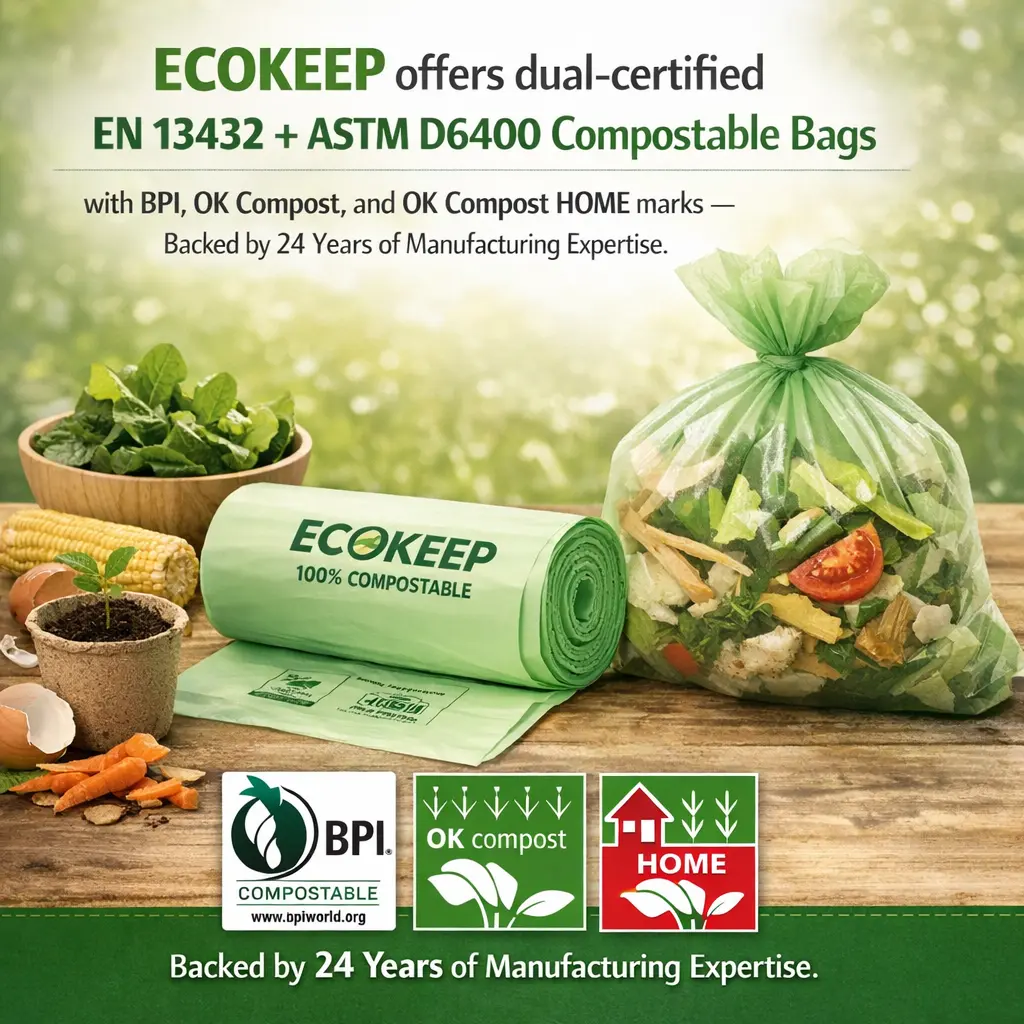
ECOKEEP offers dual-certified (EN 13432 + ASTM D6400) compostable bags with BPI, OK Compost, and OK Compost HOME marks — backed by 24 years of manufacturing expertise. Request our certification package today.
Get a Free QuoteReferences
Biodegradable Products Institute (BPI) — Commercial Compostability Certification
U.S. Federal Trade Commission — Green Guides for Environmental Marketing Claims
EUR-Lex — Packaging and Packaging Waste Regulation (PPWR), from 2026
Inside Energy & Environment — EU Green Claims Guidance: What Businesses Need to Know
Washington State Dept. of Ecology — Compostable Product Labeling Requirements
BPI — Industry Labeling Guidelines for Compostable Products and Packaging