Compostable Mailing Bags Wholesale | Certified Supplier Guide
Compostable Mailing Bags Wholesale: The Buyer's Guide to Certified, Durable Eco-Friendly Ecommerce Packaging
By Janet Liu · March 27, 2026 · Reading time: 7 min
If you're sourcing compostable mailing bags wholesale for your ecommerce brand, you already know that "eco-friendly" claims aren't enough anymore. Buyers and regulators demand third-party certification, real-world durability, and transparent supply chains. This guide covers exactly what procurement managers and brand owners need to evaluate before placing a bulk order — from certification standards to material science to custom printing options.
1. Why Ecommerce Brands Are Switching to Compostable Mailers
The sustainable ecommerce packaging market is expanding fast. The global sustainable e-commerce packaging market was valued at USD 35.6 billion in 2024 and is growing at a CAGR of 8.6% through 2034. Within this space, the e-commerce packaging sub-segment is projected to achieve the highest CAGR of nearly 9.64% during 2026–2035, driven by the increasing volume of direct-to-consumer shipments and marketplace sustainability requirements.
Consumer behavior reinforces this trend. A 2025 survey of over 2,000 American consumers found that 90% are more likely to purchase from a brand if its packaging is eco-friendly, and 39% have already switched to competing brands because of sustainable packaging. Nearly half of Gen Z (49%) and Millennials (47%) are willing to pay more for it.
For DTC and ecommerce brands, compostable shipping bags offer a direct way to meet this demand. Unlike conventional polyethylene mailers that persist in landfills for centuries, certified compostable mailers break down into CO₂, water, and biomass within 180 days under industrial composting conditions — leaving no microplastics behind.
2. What Are Compostable Mailing Bags Made Of?
Most compostable mailing bags are manufactured from a blend of PLA (polylactic acid), PBAT (polybutylene adipate terephthalate), and cornstarch. Each component serves a specific function:
PLA — derived from fermented corn starch, provides structure and printability
PBAT — a flexible co-polyester that delivers tear resistance and elasticity
Cornstarch — acts as a filler, lowers cost, and accelerates biodegradation
At ECOKEEP (Wuhan Huali), we've refined this blend over 24 years of bioplastic research. As an ASTM D20 committee member and drafter of 15 Chinese national standards for biodegradable materials, our R&D team balances mechanical strength with certified compostability — ensuring bags perform reliably during shipping and break down reliably after disposal.
Key Takeaway: True compostable mailing bags use PLA + PBAT + cornstarch blends — not conventional LDPE with "biodegradable additives." Always confirm the base resin with your supplier before ordering.
3. EN 13432 vs. ASTM D6400: Which Certification Do You Need?
This is the single most important question for any buyer sourcing compostable mailing bags wholesale. The answer depends on where you sell.
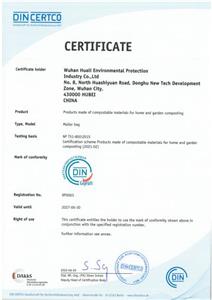
EN 13432 is the EU's harmonized standard. It requires at least 90% biodegradation within 6 months, disintegration into fragments smaller than 2 mm within 12 weeks, and zero toxic residue. EN 13432 certification is legally required for products marketed as "compostable" in the EU under the Packaging and Packaging Waste Directive. Products are typically certified by TÜV Austria or DIN CERTCO.
ASTM D6400 is the US standard, administered by ASTM International. It similarly requires ≥90% biodegradation in 180 days in an industrial compost facility and mandates eco-toxicity testing. In the US, many municipalities require ASTM D6400 compliance before allowing packaging into organic waste streams, and it's a prerequisite for BPI (Biodegradable Products Institute) certification — the most recognized mark in the American market.
Washington State, for example, now requires that any film bag claiming compostability must carry a third-party certifier logo confirming it meets ASTM D6400, along with a color signal and the printed word "compostable" on the product itself.
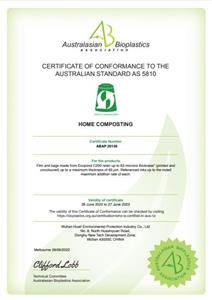
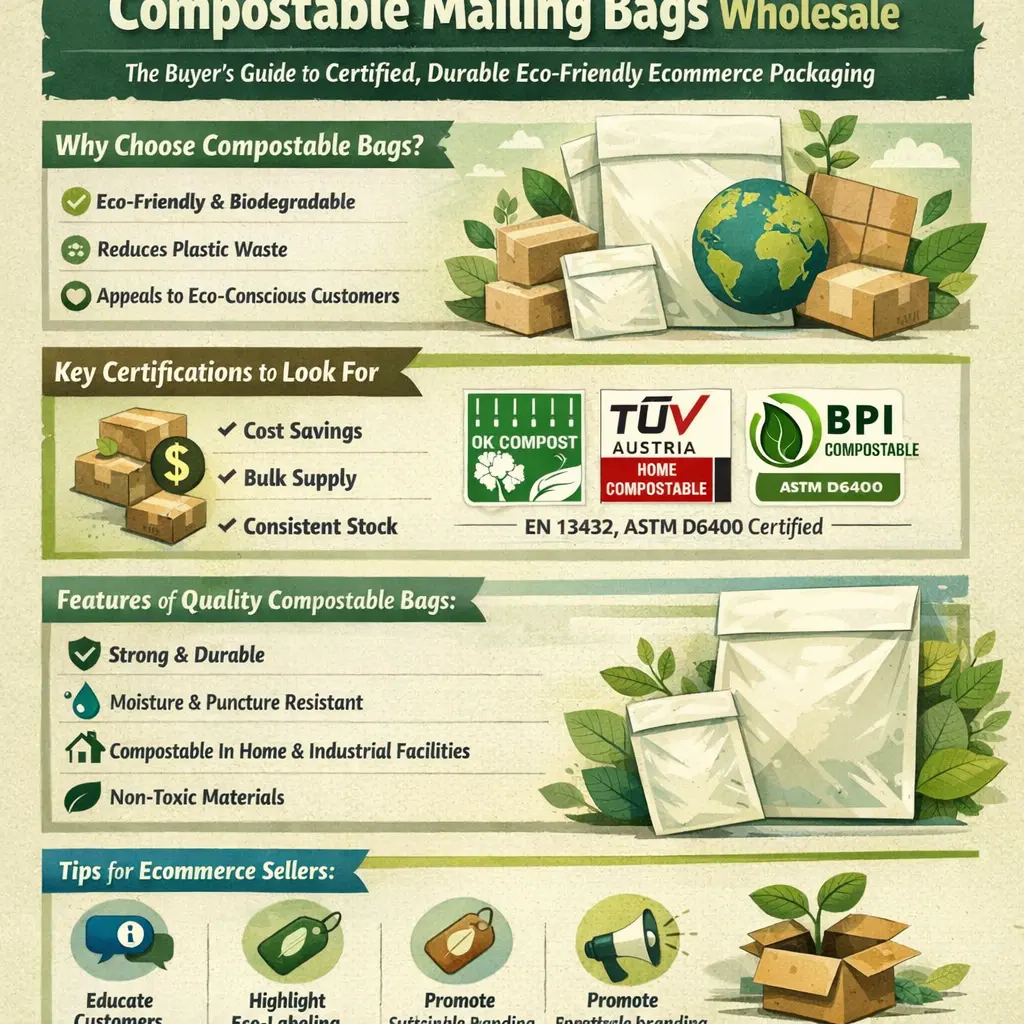
Products aiming for global distribution should ideally comply with both standards. ECOKEEP's compostable mailing bags hold dual certification — EN 13432 and ASTM D6400 — plus BPI, OK Compost, and OK Compost HOME (AS 5810), covering the EU, North America, and Australia in a single product line.
4. Durability in Transit: Water Resistance, Tear Strength, and Shelf Life
A common concern among buyers: can compostable mailers actually survive the logistics chain? The short answer is yes — when properly engineered.
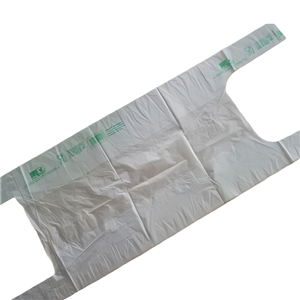
Compostable shipping bags are moisture-resistant and designed to withstand the stresses of ecommerce transit, including puncture, tearing, and exposure to varying humidity levels. The PLA/PBAT blend provides a balance of rigidity and flexibility that makes the bags suitable for soft goods like apparel, cosmetics, accessories, and bedding.
Self-adhesive peel-and-seal closures are standard, providing tamper-evident protection without additional tape. At ECOKEEP, our bags are tested to maintain integrity through standard courier handling conditions.
Shelf life is another critical factor. Our compostable mailing bags offer a 12-month shelf life when stored in original cardboard packaging in a normal, dry environment — away from direct sunlight, heat, and moisture. This gives importers and distributors a comfortable inventory window.
Key Takeaway: Compostable ≠ fragile. Certified films decompose only under composting conditions (heat + moisture + microbes). In normal storage and transit, they perform comparably to conventional poly mailers.
5. Custom Printing and Branding on Compostable Shipping Bags
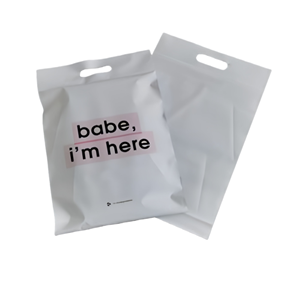
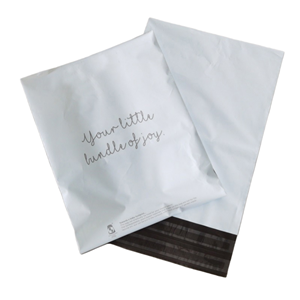
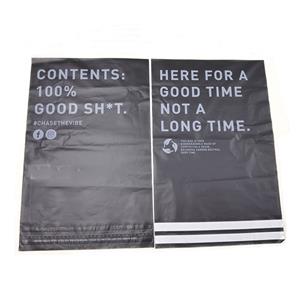
For ecommerce brands, the unboxing moment is a marketing opportunity. Compostable mailing bags support custom printing — including logos, brand colors, social media handles, and disposal instructions — using water-based or soy-based inks that don't compromise compostability.
Pantone color matching ensures brand consistency across production runs. ECOKEEP offers full-surface custom printing with options for multiple bag sizes and film thicknesses, allowing brands to tailor packaging to specific product categories without sacrificing their eco-friendly credentials.
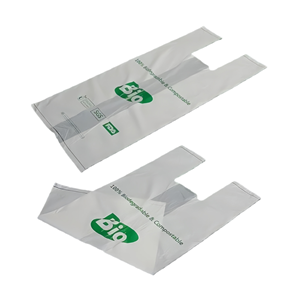
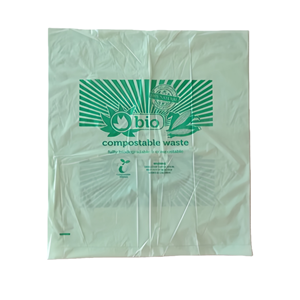
Including clear composting instructions on the bag itself isn't just good practice — in states like Washington, it's now a legal requirement. Printing the word "compostable," the certifier logo, and a color signal (green, beige, or brown) directly on the film ensures compliance at destination.
Interested in a sample with your brand's artwork? Reach out to our team — we provide free printed samples before bulk orders.
6. What to Look for in a Compostable Mailer Supplier
Not all compostable bag manufacturers are equal. When evaluating a compostable mailer supplier for wholesale orders, use this checklist:
Dual certification (EN 13432 + ASTM D6400) — ensures products ship to both EU and North American markets without re-certification
BPI and OK Compost logos — third-party verified, not just self-declared
Material-to-finished-product supply chain — manufacturers who control resin compounding and film extrusion in-house (like ECOKEEP) reduce quality variability and lead times
ISO 9001 + ISO 14001 — quality and environmental management systems that B2B buyers can audit
Production capacity and lead time — ECOKEEP's annual capacity exceeds 8,000 metric tons, with a standard production time of 3 weeks for 10-ton orders
FDA/SGS food-contact testing — important if bags may contact food products
Track record — ECOKEEP has been manufacturing compostable packaging since 2002 and was the first factory in China to produce biodegradable courier bags
Manufacturers under rising pressure must provide verifiable, third-party compostability certifications and improve product traceability to meet retailer procurement standards. Choosing a supplier that already meets these requirements protects your brand from downstream compliance risks.
FAQ
How long do compostable mailing bags take to decompose?
Certified compostable mailing bags decompose within 180 days (6 months) in industrial composting facilities operating at 55–60°C. Home composting takes longer and results vary depending on temperature, moisture, and microbial activity. The key factors affecting degradation rate are microorganisms, light, water, oxygen, and temperature.
Are compostable mailers waterproof?
They are moisture-resistant and perform well under normal shipping conditions. However, they are not designed for prolonged submersion. For most ecommerce applications — clothing, accessories, cosmetics, books — the water resistance is more than sufficient.
What's the minimum order quantity (MOQ) for wholesale?
MOQs vary by supplier. ECOKEEP offers flexible MOQs for both stock sizes and custom-printed orders. Contact us with your specifications for an exact quote.
Can compostable bags be recycled?
No. Compostable mailers should not enter conventional plastic recycling streams — they can contaminate recycled film. They should be composted in an industrial facility or, if certified for home composting (e.g., OK Compost HOME / AS 5810), in a backyard compost bin.
Ready to source compostable mailing bags wholesale?
Get dual-certified (EN 13432 + ASTM D6400) compostable mailers with custom printing, competitive FOB pricing, and a 3-week production lead time. Request a free sample today.
Get a Free QuoteReferences
Fortune Business Insights — Compostable Packaging Market Size & Growth Report, 2034
Shorr Packaging — 2025 Sustainable Packaging Consumer Report
Global Market Insights — Sustainable E-Commerce Packaging Market Size Report, 2025–2034
SNS Insider via GlobeNewsWire — Sustainable Packaging Market Forecast, March 2026
Washington State Dept. of Ecology — Compostable Product Labeling Requirements
ASTM International — D6400-21 Standard Specification for Compostable Plastics
Bioleader — 2026 Global Compostable Packaging Regulations Guide